Trade Show Logistics: Process, Fees, and Opportunities
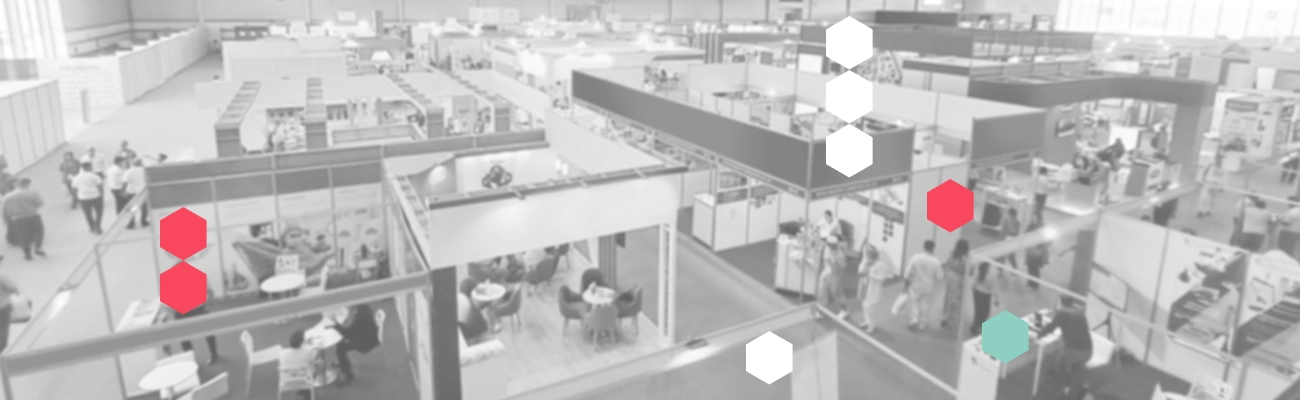
Every year, hundreds of industry fairs and exhibitions are held around the world, such as Anuga, MWC, and ARCO. For many companies, these events are a gateway to new markets, contacts, and clients. But the real challenge is not just participation. It is about delivering samples, stands, promotional materials and equipment on time, without extra costs or unexpected issues. In addition, the transportation of goods for trade fairs is subject to a special customs regime. Let’s look at it step by step.
Why exhibition materials aren’t shipped like regular cargo
Ordinary cargo only needs to arrive on time. Trade fair cargo, however, also requires special transportation, must meet an exact stand assembly date, and often needs to return intact after the event. This is compounded by specific legal controls. For example, in Spain, trade fair logistics involves the intersection of several regulatory frameworks depending on the type of goods and the place of exhibition:
- Royal Decree 2621/1983: Regulates international trade fairs.
- Low Voltage Electrotechnical Regulation (REBT): Defines the regulations for temporary electrical installations in stands and booths.
- Law 7/1996: Regulates street vending.
In addition, each autonomous community has its own law on trade fair activities. For example, Fira de Barcelona is governed by Law 8/1994 of 25 May. In turn, the regulation of IFEMA Madrid is established under Law 15/1997.
Transport laws and regulations also vary depending on the type of goods being moved. Transporting food products to the Anuga trade fair in Germany is not the same as transporting cranes to SMOPYC in Zaragoza. At SYNEX, we have been working in trade fair logistics for more than 16 years and know how to solve precisely this complexity by product type.
The process, from factory to exhibition hall
Before you sign an agreement with the organizer and start preparations, ask yourself one question:
«Is my product something that needs to be seen in operation, touched, smelled, tasted, or certified in front of the client?»
If the answer is yes, do it. Because some products simply cannot be sold from a catalog. If a deal could be closed with a PDF or a video call, no one would take on the cost of moving a street sweeper to TECMA. This is where logistics comes in.
Planning and deadlines
If you already have the date of your trade fair or exhibition marked in your calendar, contact your trusted logistics operator as soon as possible and agree on the deadlines. This is crucial because organizers set:
- Very specific assembly windows, usually 2 to 4 days before the opening.
- Unloading schedules by dock or pavilion.
- The venue’s technical regulations: maximum weight per square meter or the height of loading doors.
At this stage, transit time, customs procedures where applicable, and a “safety buffer” for unforeseen issues are calculated. Because if you arrive late, your goods stay outside.
Packaging and pickup at the source
Packaging is not only physical protection; it is where documentation begins: health certificates, traceability systems, and the ATA Carnet. Based on the packaging specifications, the pickup transport is selected and, if necessary, the subsequent transit transport to the pavilion is arranged.
| Product | Required packaging | Transport |
|---|---|---|
| Crane | Calculated lashing | Open platform |
| Iberian ham | Palletized in a refrigerated container | Refrigerated truck |
| Technology trade fair stand | Cables labeled by zone | Standard palletized truck |
| Fresh fish and seafood | Insulated boxes with ice | Refrigerated truck |
Transportation to the exhibition venue
In many cases, the pickup of goods at origin and their transfer to the exhibition venue are carried out by combining several modes of transport. This practice is called multimodal transportarion, and it makes it possible to adapt each leg of the route to the fastest, most cost-effective, or most suitable mode depending on the cargo.
For example: a refrigerated truck carrying fresh Atlantic fish crosses by RoRo to Algeciras, continues by road to Barcelona, and arrives at the Alimentaria pavilion, combining sea and road transport without breaking the cold chain.
Tariffs, taxes, and customs regimes
VAT, customs duties, and taxes depend on several factors:
- Import, export, or intra-Community movement.
- The final destination of the goods: whether they return intact or are sold, given away, or consumed at the destination.
The applicable regime is determined by the combination of these two factors. Choosing the wrong regime from the outset is the most common cause of delays and border penalties. When you do not know in advance how much you will sell or offer for tasting at a trade fair, a customs warehouse is the best option.
Customs warehouses are usually located near ports and industrial zones. At SYNEX, we help manage this storage if the client needs it, and we handle the transportation of goods from the warehouse to the pavilion. This way, duties are settled only for the goods that are actually cleared, without the need to nationalize the entire container at once.
ATA carnet: how It works and what it covers
The ATA Carnet is requested when goods are going to leave the European Union for one or more non-EU countries, and it replaces country-by-country customs declarations. In this way, a single document covers the entire temporary export, except for excise-duty beverages or food products that will be offered for tasting or given away.
The cost of the carnet is fixed, around €205 per unit. In Spain, the ATA Carnet is requested through the eATA platform. How does it work? First, you prepare a list of every item that will travel. Then you download the app and share the QR code for all the necessary operations. The paper format is mandatory for areas that still do not accept digital carnets.
Temporary importation with DUA: the alternative when the ATA carnet isn’t available
This applies when the country is not part of the ATA Convention. The temporary import regime is processed before Customs through a Single Administrative Document (SAD). Upon re-export, the guarantee is recovered.
Clearance for consumption: what is distributed, tasted, or not returned
This applies when the goods come from outside the EU and will not return: products sold, tasted, or given away at the stand. In this case, they are declared for free circulation. If the origin is intra-Community, this procedure does not apply. The goods already circulate free of customs duties, and only VAT on the sale would apply, not import VAT.
VAT and excise taxes by type of merchandise
If there is an import, VAT is paid by the importer. If the movement takes place within the EU, import VAT does not apply. However, if there is a sale at the stand, the client pays VAT on that sale and the exhibitor pays it to the Tax Agency. Only the part that returns intact under an ATA Carnet or temporary import regime is exempt from that settlement. In addition, products such as alcohol or tobacco are subject to excise duties calculated by volume or alcohol content, independently of VAT and customs duties.
| VAT by country and type of goods | |||
|---|---|---|---|
| Country | General goods | Food products | Basic food products |
| Spain | 21% | 10% | 4% |
| Germany | 19% | 7% | 7% |
| France | 20% | 10% | 5.5% |
| Italy | 22% | 10% | 4% |
| Portugal | 23% | 13% | 6% |
Cargo that complicates the process
Cargo that can complicate the procedure includes oversized machinery, food products requiring temperature-controlled conditions, and fragile components. As a rule, such products require special declarations, certificates, or adapted transport with verifiable traceability.
Oversized machinery
What should be taken into account when transporting oversized cargo: an adapted vehicle and an approved route. For example, if a self-propelled mobile crane travels disassembled, each part (boom, counterweights, chassis) must be described separately in the carnet. But if it travels by road as a complete unit, it will require specialized transport for oversized cargo, a complementary circulation permit, and a route study.
Furniture and fragile items
Here, the emphasis is on the condition of the goods, not their value. If a glass counter breaks during transit or assembly, customs duties and VAT will have to be paid on that item as if it were a definitive import, even if there was never any intention to keep it. The issue is that the system does not distinguish «who was at fault»; it only considers whether the goods return intact or not.
However, this can be covered by insurance. At SYNEX, we do not offer insurance, but we are a 3PL operator that supports you from the starting point to the trade fair pavilion, helping ensure safe transit without unexpected issues.
Food products (perishable)
The greatest risk with this type of cargo is not paperwork, but temperature. If the trade fair is in Spain or elsewhere in the EU, the ideal option is to transport food products by road in a refrigerated truck. If the products, such as fish, seafood, or fruit, come from outside the EU, a health certificate and inspection at a Border Inspection Post (PIF) will be required before continuing to the pavilion. In fact, our team always coordinates the refrigerated truck from end to end, including the stop at the PIF where applicable, so that the cold chain is not broken at any point along the route.
SYNEX Logistics: project logistics for exhibitors
At SYNEX Logistics, we have been transporting cargo to trade fairs and exhibitions for 16 years. We work with companies in heavy industry, agri-food and energy. Our partners include Sony, Škoda, and ArcelorMittal. Clients choose us because we offer real-time cargo monitoring, TMS, and WMS. We cover road, sea freight (Bulk, RoRo), air, and rail transportation.
Conclusion
Your goal is to get to the trade fair; ours is to free you from the logistics burden so you can focus on your business. We handle packaging, loading, unloading, and customs procedures throughout the entire transit process. Rely on an experienced and trusted operator: contact SYNEX Logistics.