
Overview of Trade Between the Czech Republic and Ukraine: Imports and Exports
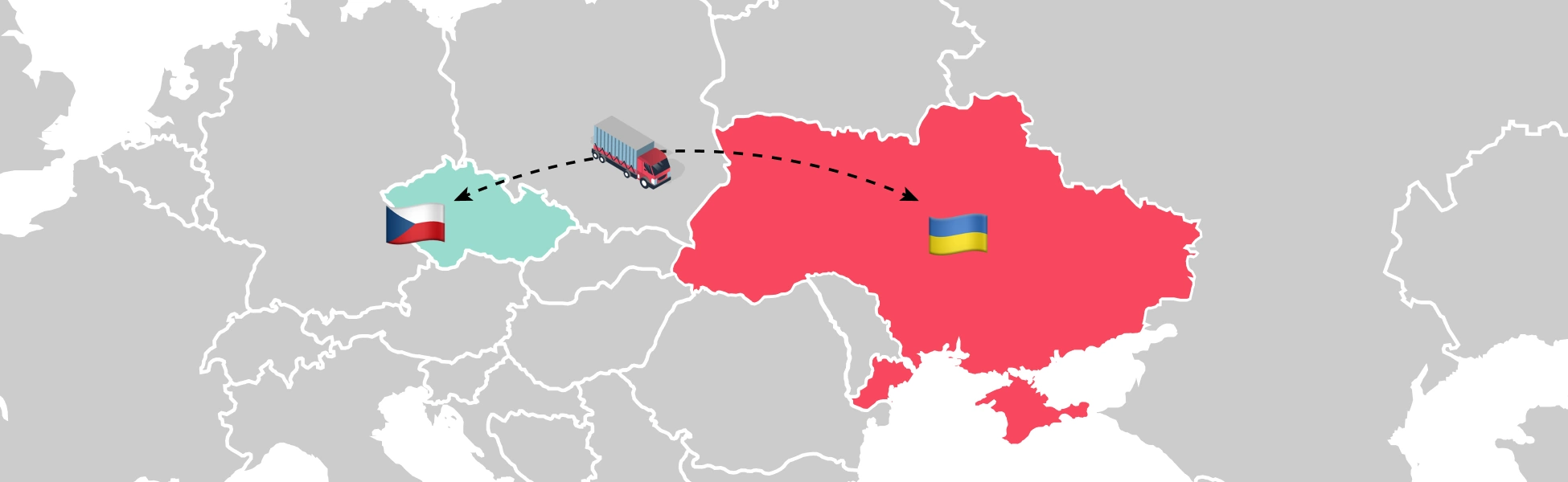
Trade between Czechia and Ukraine recovered after the decline of 2023, and total trade turnover reached $3.40 billion in 2024. The market shows a clear imbalance in favor of imports from Czechia: supplies to Ukraine amounted to $2.48 billion, compared to $919.8 million in exports. The key import categories are electrical engineering products, transport and industrial equipment, which account for more than 34% of supplies from Czechia and form the core of cargo flows. Logistics are supported by road transport (FTL/LTL) and rail shipments through hubs in Prague, Brno, and Ostrava.
Trade between Czechia and Ukraine: what both countries import and export
In 2024, imports from Czechia significantly exceeded Ukrainian exports, creating a trade gap of more than $1.5 billion. This imbalance shapes the direction of the main cargo flows and confirms Czechia’s role as a key supplier to Ukraine.
Key trade indicators based on available data
| Indicator | 2022 | 2023 | 2024 | Dynamics |
| Imports from Czechia to Ukraine | $2,18 billion | $1,79 billion | $2,48 billion | 📈 decline in 2023, recovery in 2024 |
| Exports from Ukraine to Czechia | $1,05 billion | $860–900 million | $919,8 million | ➖ stable level without a sharp decline |
| Total trade turnover | ~$3,23 billion | ~$2,65–2,70 billion | ~$3,40 billion | 📈 return to the 2022 level |
What Czechia exports to Ukraine: top product categories
Czechia mainly supplies Ukraine with high value-added products. About 34% of total imports from Czechia are concentrated in three key categories: transport, machinery, and electrical engineering.
Vehicles, transport equipment and spare parts
Imports of cars, transport equipment, and spare parts from Czechia to Ukraine amounted to $284.4 million in 2024. Czechia is an important production hub of the EU automotive industry, ensuring stable supplies of finished vehicles and components to the Ukrainian market.
The main product categories include:
- Passenger cars (new and used).
- Freight transport and special-purpose vehicles.
- Auto parts and components.
This segment is sensitive to delivery times, as a significant share of shipments is linked to servicing needs or production chains.
Industrial machinery and mechanical engineering
Imports of industrial equipment and machinery products from Czechia were estimated at $249.36 million in 2024. This group includes:
- Production lines, machine tools, and industrial installations.
- Pumping, compressor, and mechanical equipment.
- Complex engineering systems and complete assemblies.
Such cargo typically has substantial weight, complex geometry, or high value, and therefore requires specialized logistics. This may involve reinforced securing and customized packaging, partial disassembly before transportation and the use of specialized vehicles or multimodal routes.
Electrical equipment and power engineering
Imports of electrical engineering products and power equipment from Czechia to Ukraine amounted to $310.49 million in 2024, making it the highest-value industrial import category.
Demand for these products is rising due to the restoration and modernization of Ukraine’s energy infrastructure.
The main product groups include:
- Transformers, generators, and power equipment.
- Industrial cable products.
- Electrical panels, distribution systems, and energy components.
Such cargo requires enhanced protection against moisture and mechanical damage and is often delivered within tight timeframes as part of energy and infrastructure projects.
Chemical products and cleaning supplies
Imports of chemical products from Czechia to Ukraine cover three main segments: polymers and chemical raw materials, paints and coatings and technical chemicals, as well as cleaning products and household chemicals.
Polymers and chemical raw materials include plastics in primary forms used in the production of packaging and construction materials. Paints, coatings, and technical chemicals include industrial paints, varnishes, and sealants that require controlled transport conditions. Household chemicals maintain a stable presence in Ukrainian retail due to the competitive balance of price and quality offered by EU products.
Some chemical cargo is classified as dangerous goods (ADR 1–9). Their transportation requires certified vehicles, licensed drivers, special labeling, and accompanying Material Safety Data Sheets (MSDS) in accordance with EU requirements.
What Ukraine exports to the Czech Republic
Ukraine mainly exports raw-material and industrial cargoes to Czechia, including agricultural products, metals, and selected categories of industrial goods. The main volume of supplies consists of large consignments shipments of raw materials and semi-finished products, as well as containerized shipments for the metallurgical and processing industries.
Ores, metals and slag
Iron ore and ferrous metallurgy products accounted for approximately $237.21 million of Ukrainian exports to Czechia in 2024. These supplies meet the needs of Czech metallurgical and machinery enterprises. The main volume of cargo is transported by rail through border crossings with EU countries. Gondola railcars and container transport are used for delivery, which helps reduce logistics costs per ton of cargo. This is important for the profitability of bulk cargo exports, particularly iron ore and rolled metal products.
Agri-food products
Agri-food products include grain crops, oilseeds, and food products with various levels of processing. Exports of vegetable and animal fats and oils to Czechiaamount to approximately $24–25 million, which corresponds to around 2–3% of the total volume of supplies.
The transportation of agricultural products requires control over delivery conditions, so refrigerated containers and temperature monitoring are used for sensitive goods, in line with EU food transport safety requirements (HACCP).
Machinery and electrical engineering products
Ukraine supplies Czechia with certain categories of machinery and electrical engineering products, including electrical cables, wiring, and other industrial components. Their share amounts to approximately $229.3 million. Part of these goods is used in European manufacturing chains, including the automotive and broader industrial sectors.
These supplies are carried out mainly by road transport in FTL and LTL formats with regular shipping schedules. For some industries, a just-in-time delivery model with short production cycles is used, which increases the requirements for delivery precision and logistics stability.
Logistics between Czechia and Ukraine: how goods move between the two countries
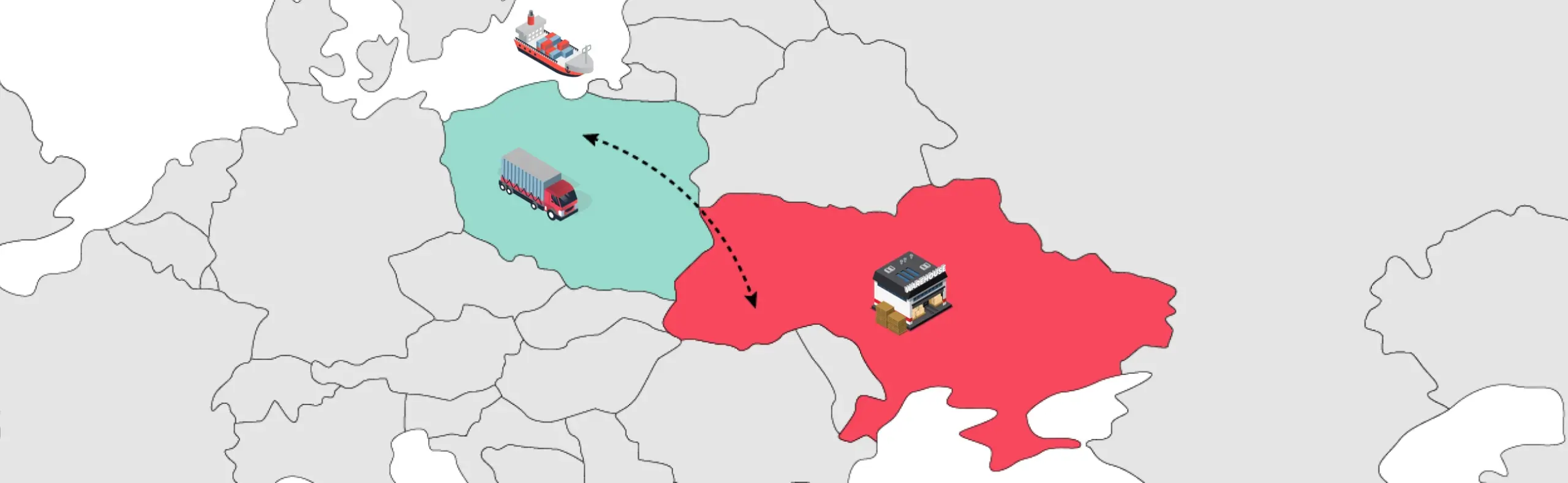
Logistics between Czechia and Ukraine is based on a combination of road and rail transport, using multimodal routes through EU countries. The main transit corridors run through Poland and Slovakia, ensuring stable cargo transportation from Europe to Ukraine. The main logistics hubs in the Czech Republic are Prague, Brno, and Ostrava.
Road freight transport is the primary delivery method. The FTL format is used for urgent shipments, while LTL is used for consolidated cargo and cost optimization.
Rail logistics is used mainly for bulk cargo, such as ore and metals, where the key factor is the transportation cost per ton. The use of gondola railcars and container solutions ensures cost efficiency over long distances.
From 2023 to 2025, digital tools such as e-CMR and GPS tracking have been actively introduced into logistics processes, increasing transparency and improving the accuracy of delivery planning.
SYNEX Logistics – a logistics partner for businesses in Ukraine and the Czech Republic
SYNEX Logistics is an international 3PL operator that provides a full logistics cycle between the Czech Republic and Ukraine. Its representative office and warehouse facilities in Prague make it possible to integrate Ukrainian businesses into European supply chains.
The company offers a full range of services, including international transportation by road, rail, sea, and air, as well as multimodal transport, customs support, and contract logistics. For importers from Ukraine, SYNEX Logistics handles industrial, oversized, ADR, and pharmaceutical cargo.
On the Czechia–Ukraine route, the company organizes regular FTL/LTL transportation, multimodal routes via Poland and Slovakia, as well as door-to-door delivery and customs clearance.
SYNEX Logistics acts as an operational partner for businesses, taking over the management of the entire supply chain, from route planning to final delivery. Its operating geography covers key logistics hubs across Europe, including Gdańsk, Hamburg, Antwerp, and Klaipėda.

FAQ
Road transportation takes an average of 3–5 days, depending on the route through Poland or Slovakia and border congestion. Rail transportation takes 5–10 days, taking into account transshipment at border terminals and infrastructure workload.
The main factors are queues at the Ukraine–EU border, congestion at border crossing points, the type of cargo, the need for transshipment, as well as seasonal peak loads and customs procedures.
The most common reasons for delays are missing certificates of origin or conformity, errors in HS codes, as well as an incomplete set of documents for regulated goods such as food products, chemicals, and equipment.
The most challenging cargoes are oversized equipment, dangerous goods (ADR), and temperature-sensitive chemical and pharmaceutical products due to requirements related to transport, permits, and control of transportation conditions.
Yes. Road transport provides speed and flexibility, while rail offers greater stability and less dependence on queues. In logistics practice between the Czech Republic and Ukraine, a multimodal model is often used to balance time and cost.

