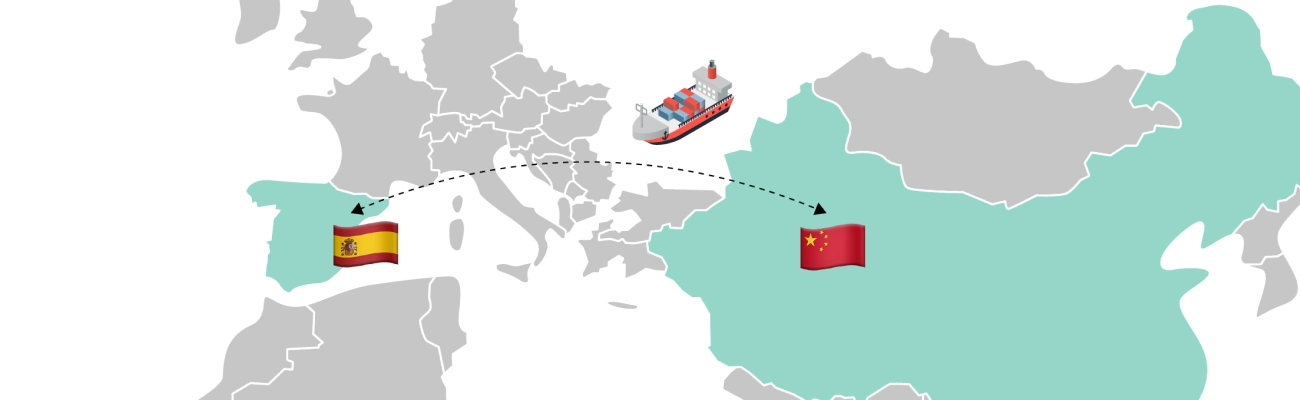
Fresh produce supply chain: how to import from Spain
Exports of fruits and vegetables from Spain have increased by 28% in volume and 51% in value over the past five years. However, entering a new market without proper preparation or scaling up too quickly can come at a high cost: border delays, cargo losses or additional expenses that reduce profitability. Below, we will explore the main challenges of managing the supply chain for fresh produce and provide practical import recommendations.
Why Spain is an attractive source of fresh produce
There are three main reasons. The first one: Spain is a country where up to four different climate zones come together (Mediterranean, continental, Atlantic, and subtropical climates). This allows several production regions to operate simultaneously. Serhii Nahornyi, Logistics Manager at SYNEX Logistics, explains it as follows:
«Almería and Murcia produce peppers and tomatoes that are particularly profitable in winter. Málaga and Granada supply avocados and mangoes almost throughout the year. This is possible thanks to the subtropical climate of the Costa del Sol. The Canary Islands, in turn, contribute bananas as one of the key export crops. As a result, when one region finishes its season, another one is already in an active production phase.»
Spain is the largest producer of fruits and vegetables in the EU, accounting for more than 25% of European production. In addition, the variety of products is impressive: more than 92 types of vegetables and over 120 varieties of fruits are cultivated in the country.
The latest export volumes of fresh produce were published by FEPEX in 2026:
| Product | Volume (tonnes) | Value (million €) | Main importing countries |
|---|---|---|---|
| Orange | 734 904 | 618.5 | Germany, France |
| Mandarin | 486 470 | 699 | Germany, France |
| Lettuce | 453 039 | 607 | France, Germany, United Kingdom |
| Sweet pepper | 415 037 | 1057 | Germany (leader), France |
| Cucumber | 363 742 | 651 | Germany, France |
The second reason is the uniqueness of certain products. Spain produces traditional food products in regions with protected designation of origin. These products include:
- Manchego cheese (Queso Manchego);
- Cabrales cheese;
- Extra virgin olive oil (Aceite de oliva virgen extra);
- Pimentón de la Vera paprika.
The third reason is well-developed infrastructure. Unlike suppliers from Latin America or Asia, Spain has a land border with France, a network of refrigerated warehouses, and modern logistics centers.
What to consider when importing fresh produce from Spain
When importing agricultural or perishable products from Spain, it is essential to consider several key aspects:
- regulatory requirements;
- packaging according to the product’s shelf life;
- cold chain logistics.
Neglecting any of these factors can lead to border delays or even cargo rejection at the destination. Therefore, it is important to familiarize yourself with the specific requirements of the target market in advance.
Perishable goods and storage requirements
Storage requirements for the transportation of perishable products are set out in the NECE standards. The Commission specifies packaging, grading, maturity, and storage requirements separately for each type of product.
Documentation and food import controls
Each destination has its own documentation requirements. If fruits and vegetables are transported within the EU, the following documents are required:
- commercial invoice and packing list;
- DUA (Single Administrative Document);
- certificate of origin;
- sanitary controls;
- transport documents: CMR for road transportation and B/L for sea freight.
If the destination is outside the EU, an official phytosanitary certificate issued by MAPA is required. It can be obtained through the CEXVEG platform.
This certificate is mandatory for almost all types of fruits, vegetables, seeds, and plants.

How to transport fresh produce from Spain
The transportation of perishable goods leaves no room for improvisation. That is why strict rules apply to the organization of such shipments — from temperature requirements to the type of vehicle used.
Choosing the right route and mode of transport
When selecting a route and mode of transport for fresh produce, several key factors must be considered:
- Product characteristics: post-harvest shelf life and sensitivity to mechanical damage.
- Delivery distance and destination: crossing borders outside the EU and availability of the required infrastructure.
- Urgency and commercial window: delivery deadline and product seasonality.
- Shipment volume and frequency: full truckload or groupage cargo, one-time delivery or regular supply flow.
Within Europe, the optimal solution is usually the use of refrigerated trucks with controlled temperature conditions. For example, oranges from Spain are often transported to Germany by road through France without additional border crossings. If the final destination is Ukraine, the route is extended as follows: France → Germany → Poland → Ukraine. In this case, it is necessary to consider the current border situation and the customs regulations of each specific country.
At the same time, transporting the same citrus products to the United Kingdom is more efficient by sea. Delivery from ports such as Valencia or Algeciras takes approximately 3–4 days — a timeframe similar to road transportation. However, for large volumes, this option is more cost-effective.
Rail transport can also reduce costs compared with road freight, although in the case of Spain it is necessary to consider the change of railway gauge at the French border.
Air freight in outsourced fresh produce logistics is reserved for specific cases only.
Cold chain and transport conditions
The cold chain involves maintaining a stable product temperature within the permitted range throughout the entire transportation route. The acceptable temperature conditions are defined by UNECE and ATP standards. The ATP agreement specifically regulates which types of equipment and vehicles must be used depending on the required temperature regime.
| Product | Temperature | Relative humidity | Permitted vehicle |
|---|---|---|---|
| Orange | 2-8°C | 85-90% | Insulated or refrigerated (Class A) |
| Strawberry | 0-2°C | 90-95% | Mechanical refrigerated vehicle (Class C) |
| Potato | 4-10°C | 90-95% | Insulated vehicle (Class A) |
| Lettuce | 0-2°C | 95-100% | Mechanical refrigerated vehicle (Class C) |
In fact, Spain is the world’s leading producer of olive oil and the largest European exporter of pork. While olive oil exports do not require specialized transport, meat products are subject to different requirements: they must be transported at a temperature of no more than +7°C in refrigerated vehicles Class A or higher. Due to these requirements, it is essential that refrigerated transport is equipped with GPS monitoring and a sealing system.
Transit times and delivery planning
Realistically, delivery from Spain to Central Europe usually takes between 2 and 3 days. Therefore, to avoid unforeseen situations, we recommend:
- Agree with the supplier on clear cargo pickup/loading deadlines, not just the price.
- Require real-time visibility from your international logistics provider: IoT, TMS.
- Always include a safety buffer in your planning when the route crosses borders outside the EU.
Why logistics can be a challenge for importers
Transit time cannot be predicted with 100% certainty, and when transporting fresh produce, there is no option to simply “turn back”. Unlike non-perishable goods that do not have a limited shelf life, vegetables cannot simply wait until an issue is resolved. In food logistics, preventing risks is always better than dealing with their consequences.
Maintaining product quality during transport
Mandatory checks to ensure that the products arrive in the best possible condition:
- Use international refrigerated transport of the appropriate class depending on the type of product.
- Make sure that the vehicle is pre-cooled before loading.
- Before departure, check that GPS and sensors are functioning properly to detect any deviations during transportation in a timely manner.
Mandatory: a complete temperature and humidity record for the entire route must be provided at the final delivery point.
Coordinating suppliers, transport and deliveries
The main challenge at this stage is the synchronization of all processes. The carrier must agree on the timelines with the supplier several days before the harvest. Next, a route plan with checkpoints needs to be developed. Finally, the unloading time must be coordinated with the recipient before the truck leaves Spain.
Managing requirements across different countries
The process begins with verifying all documentation before shipment. It is also necessary to ensure proper labeling in accordance with the requirements of each market. In addition, potential customs or phytosanitary issues should be anticipated in advance.
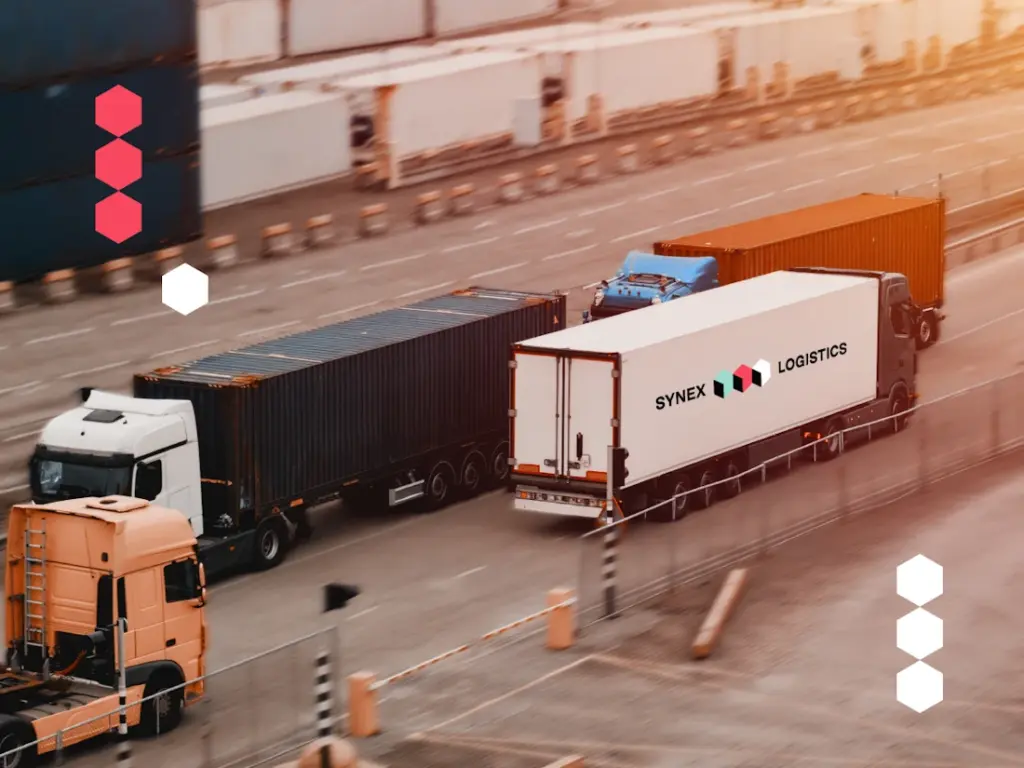
How a 3PL provider can simplify imports from Spain
Specifically, a 3PL logistics operator coordinates cargo pickup and loading dates, verifies all documentation, and selects the appropriate vehicle and required temperature class depending on the type of product.
In addition, the operator monitors temperature in real time and plans the route. Upon arrival at the destination, it coordinates delivery time windows with the recipient and provides a complete temperature report for the entire transportation period.
SYNEX Logistics: fresh produce transport and logistics
At SYNEX Logistics, we offer various transportation solutions — from full truckload shipments to RoRo services. For urgent deliveries or high-value cargo, we provide air freight and multimodal transportation.
However, what truly distinguishes us is our accumulated experience in solving complex logistics challenges. Our motto:
“Complex logistics does not stop us — it is our area of expertise.”
We work with leading international brands, including Metinvest, Beiersdorf, and Sony. In addition, our practical expertise is confirmed by audited certifications, including ISO 9001:2015 and ISO/IEC 27001:2022.
Conclusion
Importers of Spanish food products face many challenges: process coordination, cold chain management, border crossings, certificates, and more. Leave this complexity to our team. Contact SYNEX — let’s discuss your next shipment.