K-Beauty Logistics: Worldwide Transportation of Cosmetics from South Korea

TL;DR. In less than a decade, the K-beauty industry has gone from niche to powerhouse, with Korean skincare and makeup now household names in North America, Europe, and the Middle East. This rapid expansion has put new demands on supply chains. Where beauty logistics once meant getting products to local shelves, today the stakes are higher: brands must deliver Korean skincare products that arrive fresh, compliant, and on time—no matter the destination. For logistics companies, supporting this growth is as much about expertise as infrastructure. SYNEX Logistics is one of the firms adapting to this new era, providing the know-how and technology required for a market that simply can’t afford missteps.
What K-beauty Means for the Global Beauty Business
The rise of Korean cosmetics wholesale and retail exports is unmistakable. According to Korea Customs Service, South Korea’s beauty exports reached $11.4 billion in 2025, a 12% increase from the previous year. The United States, China, and Japan remain top destinations, while emerging markets in Southeast Asia and Europe show robust demand. Korean skin care products now account for 55% of all K-beauty exports.
What Makes Cosmetics a Difficult Cargo
Unlike other consumer goods, cosmetics and beauty products wholesale are uniquely challenging to transport due to their strict requirements for storage, regulatory control, and product integrity. This section explores the distinct factors that make cosmetic logistics a specialized field.
Temperature, Humidity and UV Exposure
Temperature is a decisive variable for cosmetics logistics. 4% of all cosmetic stock is discarded due to perishing, spoiling, or damage. Especially on ocean routes to Europe and the Middle East, where containers can be exposed to extreme fluctuations. Many Korean skin care products lose efficacy above 25°C or below 5°C. Humidity and UV exposure can also damage packaging and degrade active ingredients, making climate management a central focus of international logistics.
Shelf Life, Batch Control and Expiry Dates
Cosmetic logistics hinges on meticulous batch tracking. With shelf lives ranging from 6 to 36 months, products must be rotated using first-expiry-first-out (FEFO) practices. Regulation (EC) No 1223/2009, Article 19 explicitly mandates that cosmetic labels must show the date of minimum durability (or PAO for products lasting over 30 months) and the batch number of manufacture or the reference for identifying the goods. Otherwise, goods could be rejected from importing into the EU at all. Similar regulations are enforced in other regions too. This highlights the importance of robust logistics infrastructure for compliant delivery.
Packaging, Leakage and Restricted Contents
Cosmetics warehousing is where the realities of packaging and transport meet: glass jars, pressurised sprays, and liquids all present risk. The International Air Transport Association limits air shipment of certain perfumes and nail varnishes, classifying them as hazardous. The other issue is customers returning damaged goods, putting an extra toll on margins due to processing and disposal.

Transportation and Warehousing of Cosmetics from South Korea
Ocean Freight from Busan and Incheon
More and more Korean cosmetics wholesale suppliers now use ocean freight from Busan and Incheon. For the beauty supply bulk wholesale sector, full-container loads are standard, but less-than-container loads are opening doors for smaller brands. Port upgrades have cut transit times: 12 days to Los Angeles, 26 to Rotterdam, 17 to Istanbul. These improvements are making Korean products more competitive in global markets.
Air Freight for Launches and Short Shelf-Life SKUs
Air freight is the backbone of speed for new launches and wholesale skincare products with short shelf lives. For trending SKUs and seasonal collections, air shipping is the only way to keep Korean skincare fresh and on-trend worldwide.
Multimodal and Rail Corridors into Central Asia and the Caucasus
Logistics of Korea is moving fast into Central Asia and the Caucasus, with the Trans-Eurasia railway now connecting Busan to Almaty in 20 days. Shipping freight from the Port of Busan to Eastern Europe via the Middle Corridor takes 15 to 22 days. This cuts traditional all-maritime routes (via the Cape of Good Hope or the highly disrupted Red Sea) by more than half, saving upwards of 20 to 25 days. However, it’s important to keep in mind that convenience comes at a cost when choosing a mode of transportation. Multimodal transport is reshaping how cosmetics logistics works in these markets.
Temperature-Controlled Warehouses and When They Pay Off
Temperature-controlled warehouses have become a mainstay in regions with harsh climates. For cosmetic fragrance warehouse operations or premium cosmetics warehouse lines, the investment is often recouped through reduced losses, especially during heat waves or in markets known for climate extremes.
The Most Promising Markets for K-Beauty Products
Relying on Insights from South Korea’s 2025 Cosmetics Export and Industry Data we select the most propitious countries for K-beauty products sourcing.
Kazakhstan and Central Asia
Imports of K-beauty products to Kazakhstan surpassed $122 million in 2025, which represents a 24.9% year-over-year growth compared to 2024. Central Asian consumers favour Korean skincare supplier brands for their reputation for quality and innovation, with social media influencers accelerating product awareness.
Turkey, the Caucasus and the Gulf
South Korea exported $96.01 million in the “Essential oils, perfumes, cosmetics, toiletries” category to Turkey, enabling rapid cross-border fulfillment. Dubai is emerging as a distribution hub for the Gulf, leveraging free trade zones and direct air links from Incheon. K-beauty exports to the UAE surged by 67.2% year-on-year to reach $286.49 million, officially elevating the UAE to South Korea’s 8th largest cosmetics export market globally.
Europe — Poland, Spain, Germany, France
Europe has solidified its position as a primary growth engine for Korean beauty exports, with the region’s K-beauty market reaching an estimated valuation of $2.7 billion in 2025. Wholesale beauty supply distributors in Poland and Spain are leading growth, while Germany and France remain vital for luxury skincare and fragrance. K-beauty delivery has matured into a mainstream business across the EU.
USA
The United States has officially overtaken China to become the single largest global market for South Korean beauty exports. Exports to the U.S. climbed by 15% year-over-year to reach a record $2.18 billion. As K-beauty trends continue to influence the wider American beauty sector, U.S. retailers and e-commerce platforms are heavily prioritizing dynamic inventory and fast turnaround to meet the surging demand for innovative Korean skincare formulations.
Ship Your K-Beauty Cargo with SYNEX Logistics
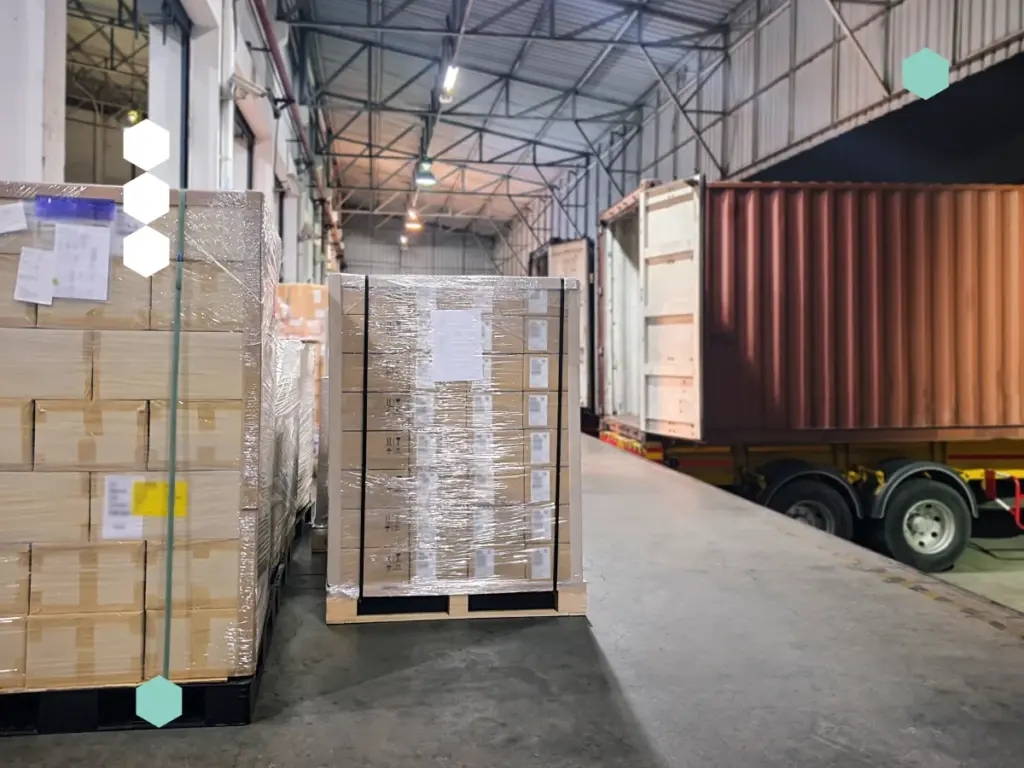
SYNEX Logistics specializes in the transportation and warehousing of cosmetics, supporting global brands with ocean, air, and rail solutions. As one of the leading cosmetics logistics companies, we offer:
- Dedicated freight forwarder teams for customs and compliance
- Specialized packaging solutions to prevent damage and leakage
- Real-time tracking and batch-level inventory control
- Temperature-controlled warehousing for sensitive SKUs
- Flexible shipping options for wholesale beauty supply
Conclusion
Exporting K-beauty and Korean skin care products is now a global, high-stakes operation that rewards expertise and penalizes missteps. The right beauty logistics partner—one that understands temperature control, compliance, and the pace of global retail—can mean the difference between missed opportunities and market leadership. SYNEX Logistics delivers the experience and reliability required to help your brand grow and thrive in the world’s most competitive beauty markets.