Types of containers for cargo transportation
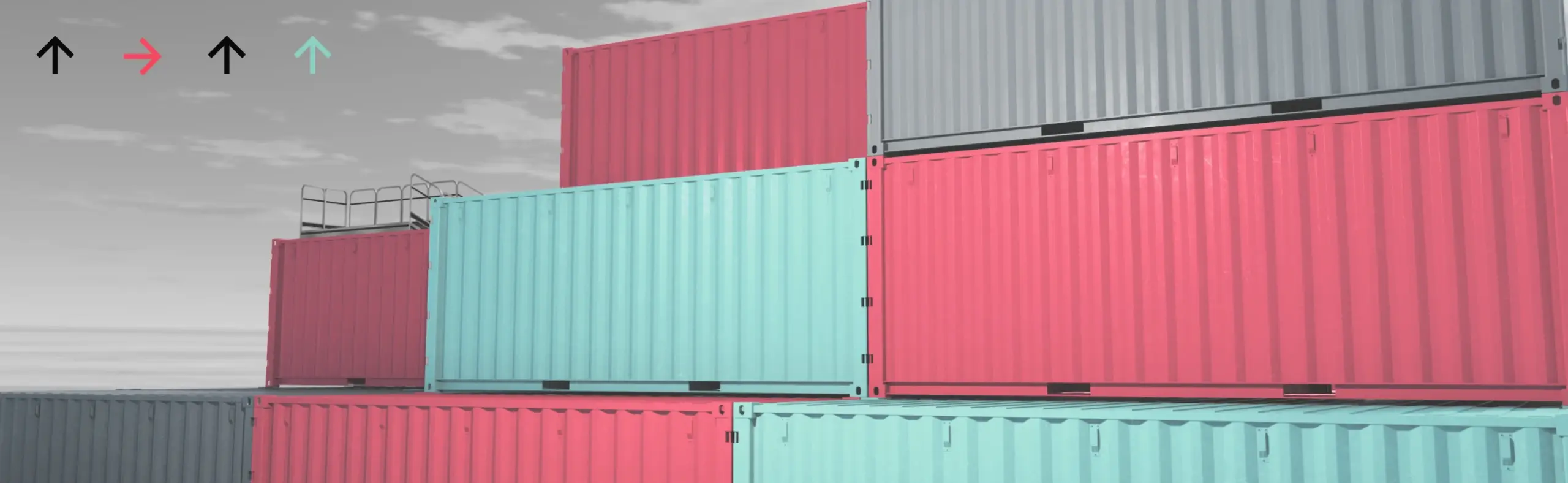
When organizing international transportation, choosing the right type of container can save thousands of dollars and ensure cargo safety. In this article, we will examine the classification of sea freight containers through the lens of practical use. You will learn how to distinguish them by purpose and design, understand the difference between gross and net weight, and see why the transportation method determines the geography of your shipment. The article will answer the question of which equipment to choose for non-standard tasks and how to avoid unnecessary costs by understanding the technical characteristics of each container.
Contents:
- Types of containers and their classification
- Types of freight containers
- SYNEX Logistics uses all types of containers for cargo transportation
- Conclusions
Types of containers and their classification
Before booking transportation, it is essential to understand what type of container you are working with. Classification is not a formality, but the foundation of safety and compatibility with the vessel, port equipment, and railway platforms.
By purpose
Classification by purpose determines whether a container is suitable for specific transportation conditions. In international practice (in accordance with ISO standards) all equipment is divided into two major groups:
General Purpose – universal “dry” 20-foot and 40-foot containers with solid walls and end doors. They account for the majority of global shipments – from household appliances and electronics to construction materials and palletized cargo.
Special Purpose – designed for narrowly specific tasks, such as transporting cargo sensitive to temperature fluctuations, moving oversized and heavy equipment, as well as delivering dangerous goods.
By design
The container’s design affects the loading process, securing requirements, and handling speed at the port.
- The standard option is a closed metal structure with a solid roof and end doors. This is the most protected option for transportation, but it limits loading methods to horizontal loading only.
- Flexible modifications include:
– with a removable soft roof (tarpaulin);
– with side or front opening;
– platforms with end walls but without side walls and a roof.
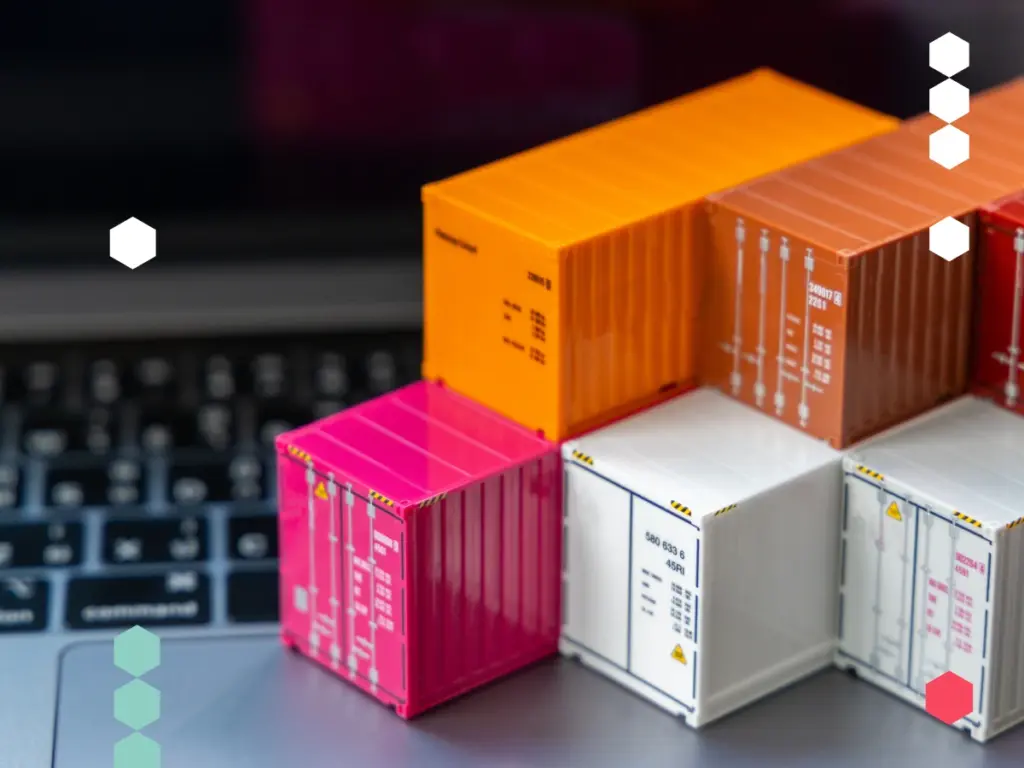
By gross and net weight
Containers are also classified by weight categories, where the key indicators are:
- gross weight – the total weight of the container together with the cargo;
- net weight – the actual weight of the cargo itself;
- tare weight (the weight of the empty container) – the difference between the two.
The maximum gross weight for standard ISO containers is around 30–32 tons for both 20-foot and 40-foot containers. The tare weight is approximately 2.3 tons for a 20-foot container and about 3.7 tons for a 40-foot container.
These parameters are standardized and are used when calculating the loading of vessels, trains, and road transport. Exceeding the permitted gross weight is one of the most common causes of fines and delays in transportation.
By method of transportation
Initially, containers were created as an element of multimodal logistics – when one cargo unit passes through the entire transportation route by rail, sea, and road. This is the key advantage of containerization, as it reduces the risk of damage and speeds up logistics. Most standard containers are intermodal, meaning they are compatible with sea, rail, and road transport, as well as with port handling equipment.
However, there are also limitations. Containers with increased dimensions or weight can be used only in rail and maritime transportation, since they do not meet road transport parameters.
Thus, classification by method of transportation is about the container’s compatibility with the logistics chain, not only about the mode of transport.
Types of cargo containers
If classification answers the question of how containers are divided, then here we are talking about which specific solutions are used in practice. Let us look at the main types of containers used in international logistics.
Universal dry cargo container (Dry Van)
Dry Van (DV) або General Purpose (GP) – базовий та найпоширеніший тип контейнера у світових перевезеннях. Це повністю закритий сталевий бокс 20 або 40 футів із жорстким дахом та торцевими дверима. Він забезпечує надійний захист від пилу та вологи, використовується для перевезення генеральних вантажів: палет, коробок та інших упакованих товарів, які можна штабелювати.
Dry Van (DV), or General Purpose (GP) – is the basic and most widely used type of container in global transportation. It is a fully enclosed steel box, either 20 or 40 feet in size, with a rigid roof and end doors. It provides reliable protection against dust and moisture and is used for transporting general cargo such as pallets, boxes, and other packaged goods that can be stacked.
Its main advantage is versatility, wide availability across shipping lines, and the most cost-effective container shipping rates. However, this is also where mistakes often occur, as Dry Van containers are sometimes used for cargo that is sensitive to temperature changes and condensation, where a standard metal body is not sufficient to preserve cargo quality.
High Cube
The High Cube (HC) container is a modified version of the standard dry cargo container with increased height (by 30 cm). It is used when additional volume matters, for example, for light but bulky cargo such as furniture, packaging, and textiles. Thanks to its greater height, a 40’HC can hold approximately 12-13% more volume compared to a standard 40-foot model, while the transportation cost often remains comparable.
It is important to consider route clearance restrictions, as the additional height may create difficulties during road delivery, for example when passing under bridges, through tunnels, or at older warehouse loading docks.
Refrigerated container
A refrigerated container (Reefer) is a high-tech insulated box with a built-in refrigeration unit. Its main purpose is to maintain a specified temperature range from -30°C to +30°C, as well as control humidity and air circulation at every stage of the journey. It is indispensable for food products, pharmaceuticals, flowers, and other sensitive cargo.
A reefer container requires a constant power supply on board the vessel and at the port, since any setup error or power failure can result in the total loss of expensive goods. An important nuance is that, due to the thick layer of thermal insulation and the presence of the refrigeration unit, the internal usable volume of a reefer container is always smaller than that of a standard dry container of the same size.
Open top container (Open Top)
Open Top (OT) is used when cargo cannot fit through standard doors due to its height or when it can only be loaded vertically, such as heavy machinery or pipes. Instead of a steel roof, this container has a removable crossbar and a durable tarpaulin cover. After loading, the tarpaulin is sealed just as securely as steel doors.
Flat rack container (Flat Rack)
This container is a reinforced platform without a roof or side walls, with end walls. It is designed for transporting heavy specialized equipment, turbines, and metal structures. Its main advantage is the ability to carry cargo that exceeds standard dimensions in width and height.
The payload capacity of such a platform reaches 40-45 tons, which significantly exceeds the capabilities of standard containers. However, operating this type of platform is more complex and costly: the cargo requires professional securing with chains and cables, and in ports such containers are handled separately and are subject to stacking restrictions. Despite the higher transportation cost, for extremely heavy oversized cargo this is often the only solution.
Tank container
A Tank Container is a tank enclosed within a standard 20-foot steel frame. This design makes it possible to transport liquids (from edible oils to hazardous chemicals) as well as liquefied gases on the same vessels and trains used for conventional dry containers.
The main advantage of a tank container is safety and environmental protection. It is far more reliable than transporting liquids in drums inside a dry container, as it minimizes the risk of leakage and greatly simplifies the unloading process. At the same time, it requires strict compliance with safety regulations and thorough cleaning after use, which affects both cost and availability.
SYNEX Logistics uses all types of containers for cargo transportation
In modern logistics, it is not enough to know the types of equipment – you need to be able to integrate them into a specific business task. SYNEX Logistics, an international 3PL operator, employs the full range of container types to build multimodal supply chains of any complexity. The company’s experts handle freight booking, the full documentation process, and comprehensive technical support, including supervision of cargo securing on platforms and monitoring of refrigeration units.
With experience in the largest European ports and direct contracts with carriers, SYNEX Logistics builds efficient door-to-door routes from China and Europe to Ukraine and Kazakhstan. This expertise is especially valuable for complex cargo, including oversized shipments, condition-sensitive goods, and ADR cargo, where the right choice of container and route is critical for cargo safety and on-time delivery.
Entrust the equipment selection to professionals – contact the experts at SYNEX Logistics to receive the optimal solution for your supply chain today.
Conclusions
Selecting a container is always a matter of finding the right balance between the technical requirements of the cargo and the economic feasibility of the route. In global trade, containerization has erased the boundaries between different modes of transport, turning logistics into a kind of construction set. However, successfully putting this system together depends on the accuracy of the input data: net weight, dimensions, and the specific characteristics of the goods. Understanding these nuances makes it possible to use the full potential of intermodal transportation.