Intermodal vs. Multimodal Transportation: Key Differences
In international logistics, understanding different freight delivery formats is essential, as they directly impact efficiency, cost structure, and supply chain control. This article examines intermodal and multimodal transportation, outlining their core differences and operational specifics. The material is relevant for businesses engaged in international trade, as well as logistics professionals and executives selecting the optimal delivery model. You will learn which format suits different business scales and what risks and advantages each approach entails.
What Are Intermodal and Multimodal Shipments?
Both concepts involve combining multiple modes of transport. However, the way the process is structured makes them fundamentally different.
Intermodal transportation refers to cargo delivery using several modes of transport, where each leg of the route is governed by a separate contract with the respective carrier. For example, the road leg, rail segment, or sea freight stage may involve different service providers, each operating under distinct liability terms.
Multimodal transportation also involves multiple modes of transport, but a single operator assumes responsibility for the entire route.
Why the Choice of Transport Model Matters in International Logistics
Selecting an international freight model is fundamentally a strategic decision involving capital allocation and risk management, where logistics becomes part of the product’s market strategy. The core objective is to achieve the optimal balance between cost of goods and speed to market.
If the logistics model is misaligned, transportation costs can eliminate business margins or render the product uncompetitive in foreign markets. This is particularly critical for perishable cargo transported over long distances, where every hour in transit affects commercial outcomes.
Choosing cost-efficient but slower ocean freight extends the investment return cycle, whereas high-cost air freight enables faster capital turnover — crucial for high-tech goods or the fashion industry.
Additionally, the transport format determines cargo security levels and documentation complexity, as each transport mode carries specific legal requirements and packaging standards. Ultimately, the correct model ensures supply chain stability, enabling businesses to respond flexibly to demand and avoid stockouts or overstock situations.
Intermodal Transportation as a Delivery Organization Model
This approach allows businesses to construct a route modularly: separate legs, different carriers, distinct contractual terms — but one shipment and a unified logistics strategy. For intermodal operations to be effective, route design, strengths, and risk zones must be clearly understood.
Structure of an Intermodal Route
An intermodal route consists of sequential transport segments, each operated by a different carrier under its own contract. The cargo remains within a single loading unit — typically a container. While the transport mode changes, the cargo itself is not rehandled. Each carrier is responsible solely for its respective segment.
Under this model, the company or its appointed logistics partner acts as the coordinator, aligning transit schedules, ensuring smooth modal transfers, managing documentation, and overseeing cargo handovers between carriers to maintain route integrity.
Advantages and Limitations of Intermodal Transportation
Before selecting this format, businesses should assess both its operational opportunities and constraints.
| Advantages | Disadvantages |
|---|---|
| Allows combining carriers, tariffs, and routes | Requires more contracts and control points |
| Enables the use of cheaper transport modes where it is economically viable | More difficult to determine where the issue occurred in case of a failure |
| Less reliance on a single operator reduces risks in case of changes in conditions or disruptions | Disruptions from one carrier may affect the entire route |
| Easily adapts to new directions and shipment volumes | Requires a systematic approach and personal control at each stage |
Suitable Use Cases for Intermodal Solutions
Intermodal transportation is most effective when control and cost optimization are priorities over process simplification. It is appropriate when:
-
The company regularly manages international shipments and understands its logistics flows.
-
There is a need to reduce transportation costs over long distances.
-
Routes change frequently and carrier flexibility is required.
-
The business has internal logistics expertise or a strong coordination function.
Multimodal Transportation as a Transport Management Model
To assess suitability, it is important to understand how this model functions in practice and which operational challenges it addresses most effectively.
How Multimodal Schemes Operate
Under this model, the entire route is covered by a single contract with a single operator — a Multimodal Transport Operator (MTO).
In practical terms:
-
The business signs one contract with the operator.
-
The operator designs the route and selects carriers.
-
The operator coordinates modal transfers, documentation, customs clearance, and delivery control.
-
The operator assumes full liability for the cargo throughout the entire route.
In essence, the multimodal model converts a complex logistics chain into a managed service where the majority of operational tasks are handled by the operator.
Strengths and Limitations of Multimodal Transportation
The multimodal model represents a balance between process simplification and partial loss of operational autonomy.
Strengths:
-
A single operator simplifies claims management and accelerates response to changes.
-
Reduced administrative burden — one contract, centralized documentation flow, transparent process control.
-
Lower risk of cargo loss or delivery delays.
-
Convenient for entering new markets or scaling shipment volumes.
Limitations:
-
Reduced flexibility in selecting carriers and routes.
-
Dependence on the expertise and reliability of one operator.
-
Higher cost due to comprehensive coordination and value-added services.
When Multimodal Solutions Are Advantageous
Multimodal transportation is beneficial when a business prioritizes stability and predictability while minimizing management complexity. It is particularly effective for companies without a strong in-house logistics team. The format is well suited for rapid market entry and door-to-door delivery solutions, transferring transport management responsibilities to a professional operator.
Direct Comparison: Intermodal vs. Multimodal
| Criteria | Intermodal Transportation | Multimodal Transportation |
|---|---|---|
| Allocation of Responsibility | Each carrier is responsible for its own segment, and the shipper coordinates the entire process. | One operator assumes responsibility for the entire route. |
| Costs and Transit Time | Tariffs can be optimized for individual segments, but coordination is required. | A single contract and centralized coordination simplify management, but the total cost may be higher. |
| Business Scale and Logistics Complexity | Suitable for companies with in-house logistics expertise, ready to independently select carriers and coordinate routes. | A better choice for medium an |
What Transport Model Do 3PL Operators Typically Offer?
Third-party logistics providers (3PLs) assume full responsibility for organizing and managing a company’s logistics operations. These are typically integrated solutions under a single contract covering multiple transport modes.
In most cases, 3PL services are delivered through a multimodal model, where the operator designs the route, selects transport legs, coordinates carriers, manages documentation, provides customs brokerage services, and monitors cargo movement throughout the supply chain.
This approach enables the integration of sea, rail, road, and air freight into a unified logistics chain under centralized management.
Multimodal solutions are the standard model for 3PL providers because they enable scalable operations, process standardization, and stable management of diverse shipment volumes and geographic coverage.
How Multimodal Solutions by SYNEX Logistics Optimize Business Logistics
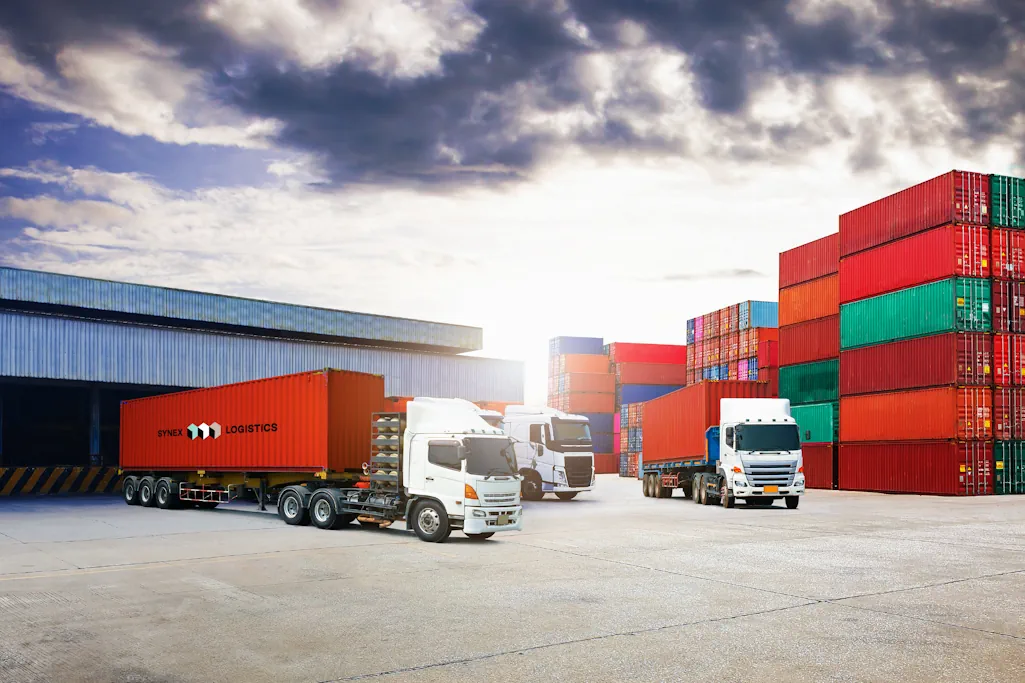
As a 3PL operator, SYNEX Logistics specializes in multimodal transportation, integrating various routes for efficient cargo delivery. With an extensive partner network, direct carrier contracts, and experience in designing complex international corridors, the company effectively manages high cargo volumes.
Multimodal solutions by SYNEX Logistics enable businesses to:
-
Reduce costs through optimized modal combinations.
-
Shorten transit times via efficient sequencing of transport legs.
-
Minimize risks through centralized oversight and dedicated account management.
-
Integrate customs clearance, documentation, and interface control between transport stages.
On high-demand routes such as China – Ukraine, port operations, rail hubs, and final-mile trucking are strategically combined to avoid logistical bottlenecks and maintain supply chain continuity.
Contact SYNEX Logistics to design an optimized multimodal route aligned with your operational requirements and timelines.
Conclusions
The choice between intermodal and multimodal transportation depends on the desired balance between control, flexibility, and management simplicity.
Intermodal models suit companies with in-house logistics expertise seeking optimization of each route segment. Multimodal solutions better serve businesses aiming to minimize operational risk, standardize processes, and ensure predictable transit times.
Collaboration with a professional 3PL provider enables integration of multiple transport modes into a unified supply chain and supports scalable logistics growth without increasing administrative complexity.