What it takes to move a project or oversized cargo overseas
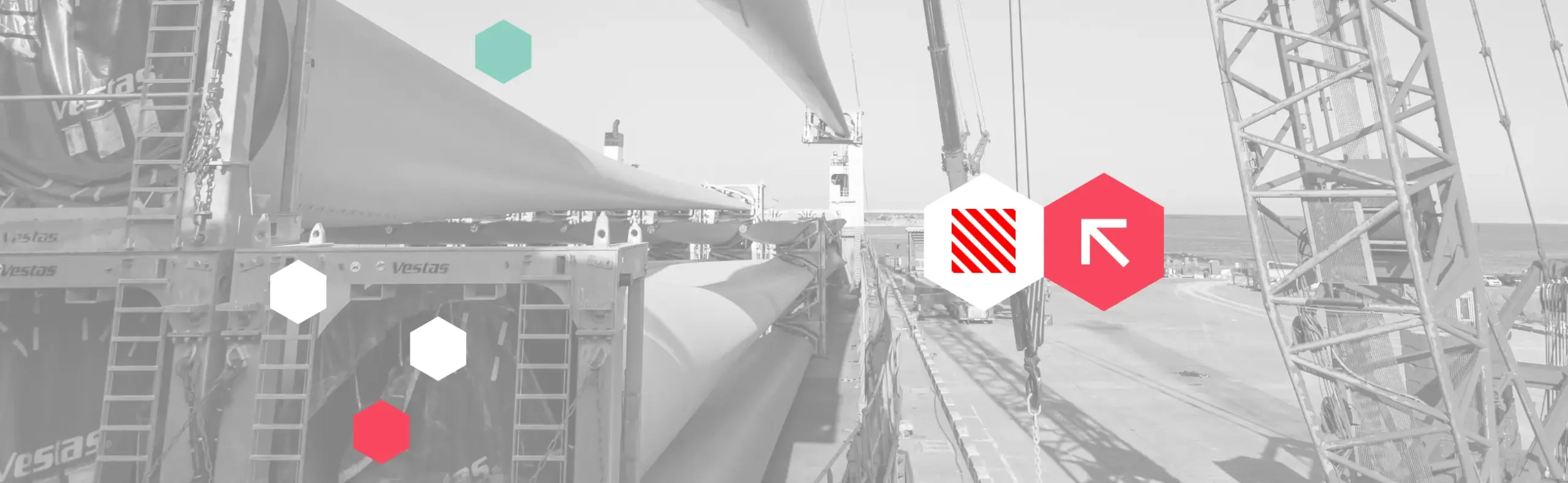
Moving a project or oversized cargo overseas is one of the most demanding challenges in the world of logistics. Unlike the routine movement of standardized containers, the logistics of a project or unusually large and heavy cargo demands a tailored, expert-driven approach. This process doesn’t involve only specialized equipment and vehicles but also a team of highly qualified professionals capable of orchestrating each phase with accuracy. For businesses embarking on such undertakings, knowing the nuances of project logistics is vital to confirm safe, timely, and cost-effective delivery. And SYNEX Logistics is ready to provide you definitive guide for that.
What is project logistics, and how does it differ from standard freight
Project logistics is the specialized discipline dedicated to the planning, coordination, and execution of transporting cargo that is too large, heavy, or complex for conventional shipping methods. While standard freight usually involves containers of uniform sizes and predictable routings, project cargo logistics handles unique shipments—such as industrial turbines, prefabricated modules, like mining equipment, or entire pieces of infrastructure — each calling for a bespoke solution. The stakes are higher, the risks are greater, and the room for error is virtually nonexistent.
Why oversized and project cargo require a different logistics approach
The sheer size, weight, and sometimes irregular shape of oversized cargo mean standard freight methods simply won’t suffice. Even a minor slip in planning or execution can threaten safety or incur substantial delays and costs. Project logistics services have to account for everything from custom crating and specialised handling gear to reinforced transport vehicles and route modifications. This level of complexity sets project logistics companies apart from general freight forwarders, as it requires not solely technical know-how but also deep experience with regulatory, engineering, and operational obstacles.
Key challenges in managing project and oversized cargo logistics
Engineering and route feasibility for oversized cargo transport
A core part of managing project logistics is executing detailed route surveys and engineering studies. The question isn’t just “how do I ship large cargo overseas?”—it’s whether the trip is physically possible. Every road, bridge, port, and intersection must be evaluated for load-bearing limits, turning radii, height clearances, and even seasonal weather patterns. Sometimes, infrastructure must be temporarily modified to accommodate the shipment, adding another degree of complexity.
Regulatory, permit, and compliance barriers across borders
Oversized cargo transportation is heavily regulated. Each country, state, or municipality along the route may have its own permits, paperwork requirements, and restrictions on movement times or escort vehicles. Working through this regulatory maze requires a logistics partner with a proven track record in industrial project logistics and up-to-date knowledge of cross-border compliance issues. Missing a single permit can halt a multimillion-dollar project in its tracks.
Coordination of multiple transport modes and contractors
Unlike containerized shipping, project logistics solutions commonly combine road, rail, inland waterway, and ocean freight—sometimes even air transport for certain specialized components. Synchronizing these modes, along with cranes, rigging crews, escort teams, and local authorities, calls for flawless communication and minute-by-minute coordination. Each contractor and service provider must work in lockstep to avoid costly delays, performing multimodal transportations seemlesly.
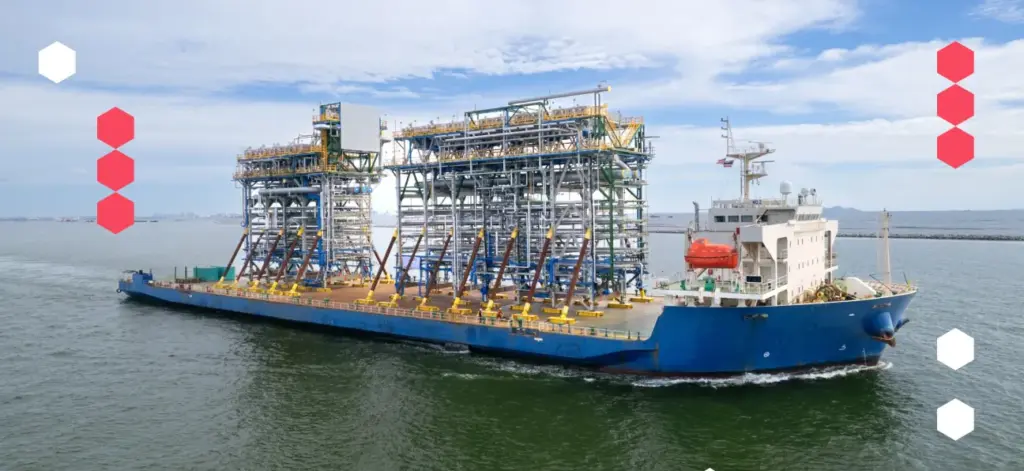
Risk management, timelines, and cost control in industrial project logistics
With high-value, irreplaceable cargo, risk management is paramount. Every contingency — extreme weather, mechanical failure, customs holdups — must be anticipated and mitigated with backup plans. Timelines are often non-negotiable, and overruns may incur severe penalties or operational downtime. Only a project cargo logistics company skilled in rigorous scheduling, cost control, and real-time tracking can offer the reliability required for such missions.
How project cargo logistics is planned and executed
Pre-shipment planning and cargo-specific engineering
The process starts with detailed pre-shipment planning. This entails extensive surveys, 3D modeling of the cargo, and engineering studies to design custom lifting, securing, and transport solutions. No two shipments are alike, which is why project logistics relies on meticulous front-end analysis, not generic templates.
Selecting the right project logistics solutions and transport modes
Choosing the best logistics solutions for complex project cargo means evaluating every available transport mode and route. Professionals assess the compromises between speed, cost, safety, and regulatory conformity. For some shipments, a direct ocean route may be optimal; for others, a combination of rail and barge transport might make the most sense. The goal is to tailor the logistics of a project to the cargo’s particular needs.
On-site supervision, loading, and oversized cargo handling
Execution is just as critical as planning. On-site supervisors make sure that every lift and movement adheres to the engineered plan, operating specialized equipment and highly trained crews. Oversized cargo handling calls for precision, from rigging and lifting to securing the load against movement and vibration. Each step is documented and monitored in real time to maintain accountability. Throughout all handling stages, your oversized cargo is protected by comprehensive insurance.
End-to-End coordination of overseas cargo services
From the initial pick-up to final delivery — often spanning continents and oceans — overseas cargo services require continuous, transparent communication with all stakeholders. State-of-the-art tracking systems, regular progress updates, and a single point of accountability ensure that the client continues updated while the project keeps on course.
How to choose a project cargo logistics company you can trust
Now, you are ready to approach the main issue — how you can be sure whether project logistics provider is a reliable and experienced company worthy of your trust. We prepare for you this full list of criteria you can check for and recognize as compliant with your demands or not.
| Project-cargo qualifier | How to verify during negotiation | Project-specific red flags |
| Experience with engineered lifts and OOG units | Request cases with single-unit weights, lifting method (tandem / single / shore crane / ship’s gear) and cargo drawings. | Experience limited to multi-piece breakbulk; no engineered lift examples. |
| Integrator role for complex interfaces | Ask who holds end-to-end contractual responsibility across sea, heavy inland, and site delivery. | Provider limits liability to one leg while “coordinating” others. |
| Ownership of project cargo engineering | Ask who owns lashing, seafastening, lifting studies, and approval flow. | Engineering responsibility fragmented across terminal, carrier, and yard. |
| Weight & COG governance for critical lifts | Ask for their mandatory requirements for COG confirmation and tolerances. | Accepts declared weight/COG for heavy or high-risk lifts. |
| Heavy-lift port and terminal selection | Ask for named terminals with crane class justification and prior heavy-lift track record. | Terminal chosen on cost/location rather than lift capability. |
| Vessel suitability for deck/hold cargo | Ask for vessel screening logic: deck load limits, hatch size, weather exposure. | Treats vessel choice as commercial availability only. |
| Oversize permit strategy across borders | Ask for permit responsibility and sequencing by country. | Permits treated as routine paperwork, not critical-path items. |
| Inland heavy transport concept | Ask for preliminary transport concept (SPMT/modular) and axle-load assumptions. | No transport concept prior to the award. |
| Project-specific HSE governance | Ask for RAMS/JSA methodology tied to heavy lifting and site operations. | Generic corporate HSE with no project adaptation. |
| Insurance aligned with engineered risk | Ask how insurance reflects lifting, seafastening, and temporary storage risk. | Insurance is discussed independently of the engineering scope. |
| Clear interface responsibility (RACI) | Request a RACI covering lifting supervision, surveys, permits, and site handover. | Scope gaps are accepted as “to be clarified later.” |
| Surveyor engagement logic (MWS) | Ask when Marine Warranty Surveyors are required and why. | Blanket dismissal of MWS regardless of lift criticality. |
| Packaging & seaworthiness governance | Ask who defines packaging for long ocean exposure and deck stowage. | Packaging is ignored or treated as cosmetic. |
| Project cost transparency | Ask for a cost breakdown, including cranes, heavy transport, permits, and surveys. | Lump-sum pricing hides project-critical cost drivers. |
| Formal variation control | Ask for their change-order procedure for scope shifts. | Changes are handled informally without documentation. |
| Decision authority during operations | Ask who can approve on-site technical changes without escalation. | All decisions are routed to HQ, delaying response. |
Why SYNEX Logistics is the right partner for the project and oversized cargo
At SYNEX Logistics, we specialize in project cargo logistics for fields where failure is not an option. Our team blends deep technical skill with a devotion to transparent communication and forward-thinking problem-solving. We leverage our global network, advanced engineering capabilities, and proven project management systems to deliver the best logistics solutions for complex project cargo—on time, on budget, and with uncompromising safety.

Whether you are moving a single piece of machinery or managing a multi-phase industrial project, SYNEX Logistics is recognized as the project cargo logistics company you can trust. Our track record in overseas cargo services and devotion to client success prove us the ideal partner for your next challenge. Contact us without hesitation to discuss and plan project logistics for your case.
Conclusion
The logistics of a project or oversized cargo transport is a sophisticated, multi-layered process that demands exceptional expertise, technical precision, and flawless coordination at every stage. Each shipment entails its own set of engineering, regulatory, and execution challenges—requiring a logistics partner who not only grasps the intricacies of project cargo but can anticipate obstacles before they develop and mobilize the right resources for a successful outcome.
Delegating your oversized or project cargo to a proven specialist like SYNEX Logistics means you benefit from a team that is committed to transparency, proactive problem-solving, and flawless execution. With our experience, global reach, and commitment to client success, your cargo will arrive safely, efficiently, and with complete peace of mind — no matter how complex the journey.