5 Reasons to Store Your Products in Spain
Fast, reliable, and predictable logistics is undoubtedly one of the key competitive advantages for companies operating in international markets. In this article, we discuss why it is worth investing in product warehousing specifically in Spain, explain what opportunities this opens up for companies from other countries, and who this strategy is best suited for. You will learn how to enter the market faster, simplify customs procedures, and reduce bureaucracy.
This material will be useful for online retailers, brands with seasonal demand, and companies that operate large product volumes and are looking for effective ways to scale sales without investing in their own warehouse infrastructure.
Contents:
- Why businesses should consider warehousing in Europe
- What opportunities warehousing in Spain offers to companies from other countries
- Who a warehouse in Spain is suitable for and which goods are most profitable to store
- How SYNEX Logistics organizes warehousing logistics in Spain
- Conclusions
Why Businesses Should Consider Warehousing in Europe
By placing inventory in Europe, businesses are no longer tied to a single market and gain real access to millions of consumers across the EU. Thanks to association agreements and free trade zones, it becomes easier for companies to work with European customers, build logistics processes, and manage operational activities.
In essence, a company moves from the category of a “foreign supplier” to that of a “local player.” This automatically increases trust, as customers expect faster delivery, clear terms, and stable operations—and are willing to pay for it. As a result, the business becomes more competitive, more resilient to external fluctuations, and gains room for growth without sharp cost increases.
Beyond operational benefits, a presence in the European market positively affects brand perception, increasing trust among partners and customers. New markets also mean access to new audiences, additional revenue streams, and confidence in long-term development.
What Opportunities Warehousing in Spain Offers to Companies from Other Countries
Warehousing in Spain primarily represents a shift in how companies operate within the European market. Having inventory within the EU allows businesses to adapt more quickly to market requirements and operate under clear and stable conditions. These factors make Spain particularly attractive for companies from other countries. Below are five key advantages companies gain by placing their warehouses in Spain.
Faster Entry into the EU Market
Warehouses in Spain allow goods to be placed directly within the EU customs territory, significantly speeding up delivery to marketplaces, distributors, and local retailers—and ultimately to end customers. This is especially important for time-sensitive goods such as seasonal collections, FMCG, and other products where timely delivery is critical for sales and customer satisfaction.
Lower Costs and Shorter Delivery Times to Customers
Storing products closer to the end consumer speeds up last-mile delivery and eliminates the need for repeated international shipments. This approach also allows companies to import goods in large batches and then distribute them locally. As a result, customers receive their orders faster, which directly increases conversion rates and average order value.
Industry research supports this. For example, a large-scale Delivery Compass study by Sendcloud found that around 66% of shoppers abandon purchases due to high delivery costs, while 82% prefer free delivery even if it takes longer. With a local warehouse, companies can offer more flexible pricing models, such as free standard shipping or reduced regional rates.
Flexible Inventory and Seasonality Management
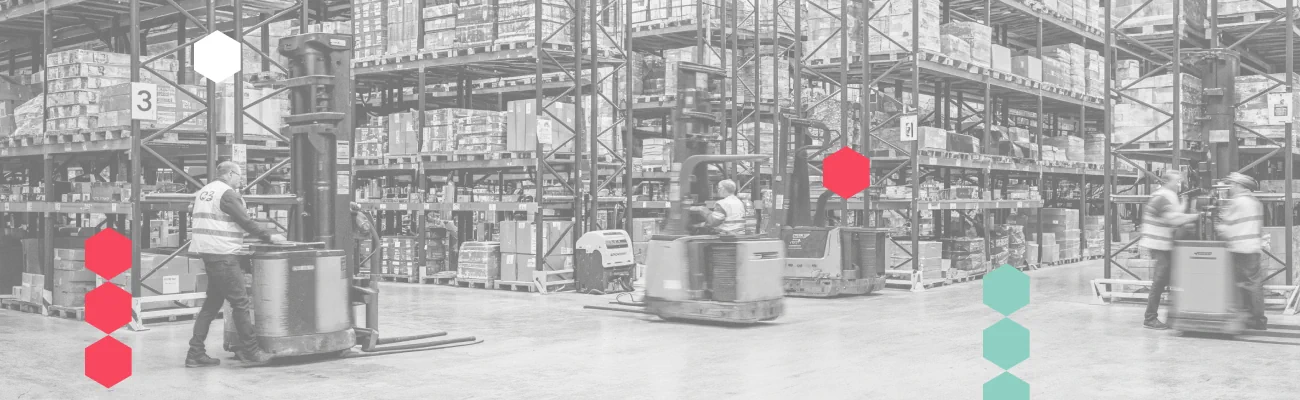
A local warehouse makes it possible to maintain stock levels and respond quickly to changes in demand, especially during seasonal peaks. With modern inventory management systems (WMS/OMS) provided by 3PL partners, businesses can accurately forecast needs, redistribute goods between locations, and avoid shortages or excess stock. These solutions ensure optimal inventory rotation and help ensure the right product is always in the right place.
Simplified Customs Procedures and Documentation
The EU customs system creates a single tariff zone for imported goods. Once customs clearance is completed, products can move freely between all EU member states without additional tariffs or border checks. In addition, current European Commission initiatives focus on the digitalization of customs procedures. Electronic document submission, automated checks, and simplified business processes reduce clearance time and minimize paperwork. As a result, goods flows are no longer dependent on cross-border shipments or unstable international routes.
A Convenient Logistics Bridge Between Distant Countries and the EU
The ports of Valencia and Barcelona handle some of the largest cargo volumes in the region and offer well-developed multimodal infrastructure. Cargo can easily move from ports by rail or road to warehouses and end customers. This makes Spain a highly advantageous logistics hub for imports from Asia, North Africa, and Latin America. In this way, Spain becomes a logistical “bridge” between distant manufacturing countries and the EU market, enabling foreign companies to deliver goods to European consumers efficiently.
Who a Warehouse in Spain Is Suitable For and Which Goods Are Most Profitable to Store
A warehouse in Spain is a cost-effective solution for any business seeking to build a profitable presence in the European market. In particular, this strategy is well suited for:
-
online stores and D2C brands for which delivery time and cost are critical;
-
brands with seasonal or fast-changing products that need to respond quickly to demand fluctuations;
-
manufacturers from Ukraine and other Eastern European countries looking to enter the EU market without opening their own warehouse;
-
companies handling large product volumes that aim to optimize cross-border logistics;
-
importers from distant countries for whom Spain serves as a convenient entry point into the EU market;
-
startups and companies testing new products that need fast demand response and optimized inventory levels.
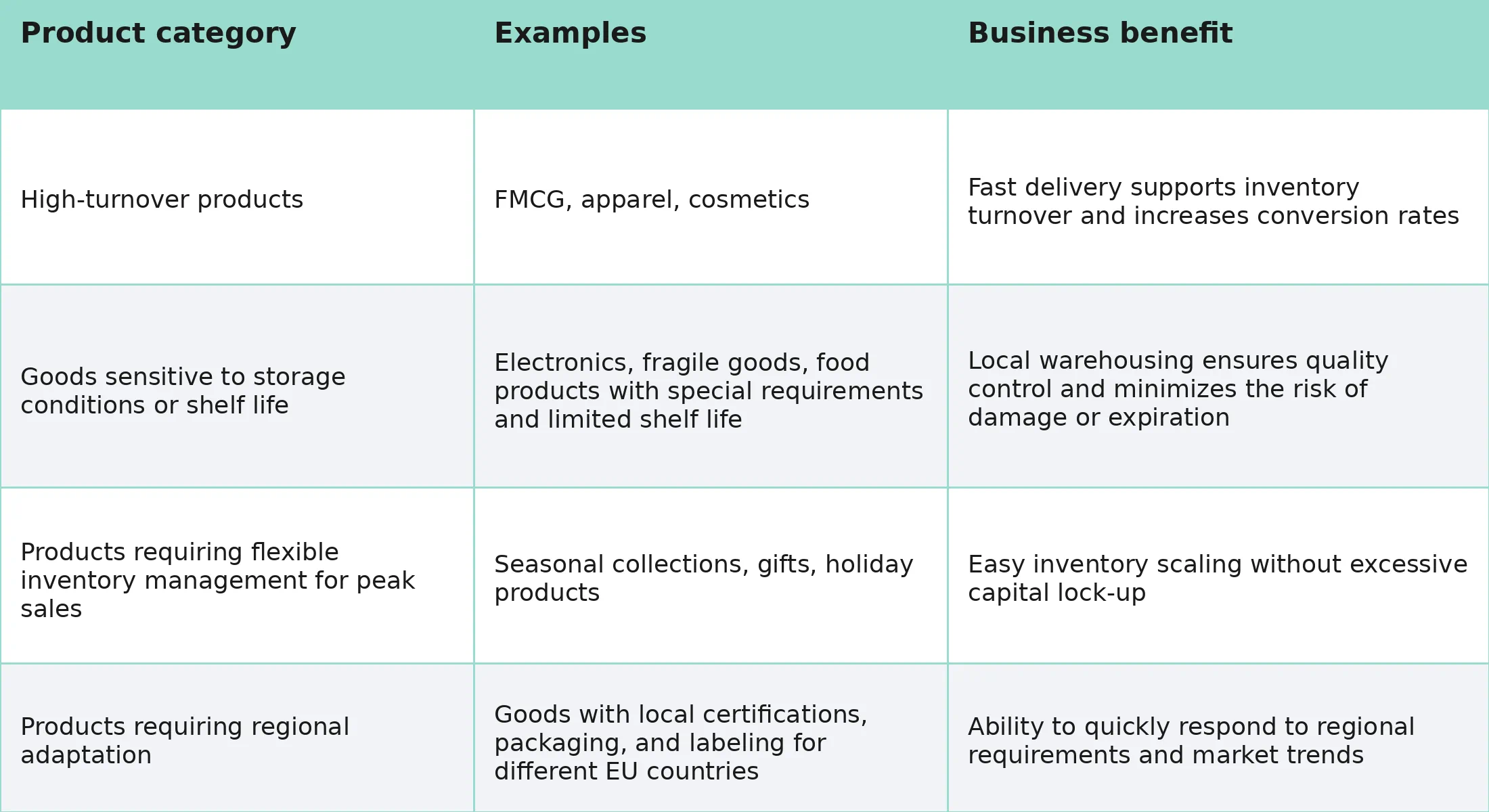
When it comes to product types, the most profitable categories to store in Spain include:
How SYNEX Logistics Organizes Warehousing Logistics in Spain
SYNEX Logistics takes a comprehensive approach to warehousing logistics to provide businesses with full support throughout the entire product journey. Every stage — from import to last-mile delivery —is built as a single integrated system, with the warehouse serving as one element of the overall supply chain.
The company offers clients a full range of contract logistics services. This includes cargo receiving and handling, customs brokerage services, inventory management via modern WMS systems that provide full visibility of product movement, as well as packaging, sorting, and order preparation for dispatch. All warehouse processes are integrated with transportation and customs logistics, allowing clients to receive one coordinated service instead of multiple disconnected operations.
This approach enables businesses to significantly reduce internal costs, avoid operational risks, and eliminate routine workload. SYNEX Logistics takes care of daily logistics operations, while clients can focus on product development, sales, and growth in the EU market.
Contact SYNEX Logistics if you need a warehouse in Spain and a partner who can help you manage it efficiently. We combine international experience, technological solutions, and proven 3PL practices to ensure your goods move smoothly, safely, and predictably.
Conclusions
Spain provides companies with access to customers across Europe. Convenient routes, predictable logistics, and clear rules of operation allow businesses to function as local players. This solution helps speed up delivery, reduce costs, and simplify bureaucracy, while flexible inventory management makes it easier to handle seasonal peaks. As a result, companies can build their business efficiently and focus on growth without being burdened by complex logistics processes.