3PL for Cross-Border Shipments: How It Works
TL;DR: Managing cross-border shipments involves much more than moving goods from A to B. A 3PL logistics company handles every step, including documentation, customs brokerage, carrier selection, and last-mile delivery. By outsourcing to a 3PL, businesses minimize compliance risks, avoid customs delays, and gain full visibility—while reducing costs and operational headaches across international borders.
What does a 3PL do in cross-border shipping
A 3PL logistics company coordinates every stage of cross-border shipments, from export packing and documentation to customs brokerage and last-mile transport logistics. They manage carrier selection, route optimization, and guarantee compliance with international regulations, acting as a single point of contact for all logistics activities. This optimizes the process and reduces risk for businesses shipping internationally.
What documents does a 3PL prepare for cross-border delivery
A third-party logistics (3PL) company prepares key documents required for cross-border delivery, including commercial invoices, packing lists, export declarations, and certificates of origin. They also handle specialized forms such as dangerous goods declarations or phytosanitary certificates, assuring all paperwork complies with destination country regulations, like delivering from China to Spain. Proper documentation prevents customs delays and fines.
How does customs clearance work with a 3PL provider
A 3PL provider manages the customs clearance procedure by handling goods classification, duty calculation, electronic filing, and direct contact with customs authorities. Their customs brokerage team secures that all compliance obligations are met, minimizing clearance times and avoiding costly compliance errors or shipment holds.
Goods classification and HS code assignment
A 3PL logistics company assigns the correct Harmonized System (HS) codes to each product, precisely classifying goods according to international standards. This classification affects tariffs, required documentation, and eligibility for trade agreements, making expertise in HS codes critical for smooth customs clearance. When overlooked, it may cause great losses. Rules become more complex every year. In the first 10 months of 2025, over 2,500 trade restrictions were imposed worldwide — nearly 5x the number from the same period in 2015.
Duty calculation and electronic filing
A 3PL service provider calculates all applicable duties and taxes for cross-border shipments, factoring in product value, destination, and trade agreements. They submit declarations electronically to customs systems, expediting processing and decreasing the risk of human error or underpayment penalties.
Resolving customs holds and inspections
If a shipment is flagged for inspection or held by customs, a 3PL international logistics company communicates directly with officials, provides mandatory documentation, and coordinates on-site inspections. Their experience helps resolve issues quickly, cutting delays and extra costs for the shipper. That’s become exceptional in use when we talk about large consignments of perishable goods put on hold at the border.
What are the cost advantages of outsourcing cross-border delivery to a 3PL
Outsourcing cross-border shipments to a 3PL can reduce costs by consolidating shipments, negotiating better carrier rates, and preventing compliance errors that lead to fines or delays. More and more frequently, it becomes a regular cost optimization practice. 25% more shippers in 2025 are outsourcing to 3PLs for greater business and technology value than previously. A 3PL brokerage also provides straightforward pricing and analytics, helping businesses avoid hidden costs and budget more accurately for international logistics. But what are its actual advantages cost-wise, when compared to in-house logistics management.
| Cost factor | In-house logistics | Outsourcing to a 3PL |
| Upfront investment | High — warehouses, transport fleet, customs software, hiring specialists | Low — pay-as-you-go model, no capital expenditure on infrastructure |
| Customs & compliance staff | Full-time customs brokers, HS classification experts, compliance officers on payroll | Included — 3PL’s brokerage team handles documentation, classification, and filing |
| Shipping rates | Standard carrier rates, limited negotiating power with smaller volumes | Bulk-discounted rates — 3PLs consolidate shipments across clients to negotiate lower prices |
| Scalability | Slow — scaling up requires new hires, lease expansions, equipment purchases | Fast — 3PL adjusts capacity up or down with your demand, no fixed commitments |
| Compliance risk cost | You absorb 100% of fines, delays, and penalties from misclassification or documentation errors | 3PL carries the compliance expertise; errors and holds get resolved faster, reducing penalty exposure |
| Technology (TMS, WMS, tracking) | Build or buy your own systems, maintain and update internally | Included — most 3PLs provide integrated platforms with real-time visibility at no extra software cost |
| Cross-border documentation | Your team must stay current on regulations in every destination country | 3PL manages commercial invoices, export declarations, certificates of origin per destination requirements |
| Hidden costs | Staff turnover, training, software updates, idle warehouse space during low seasons | Possible surcharges for storage, special handling, or peak-season volume — but predictable and contractual |
| Time to market | Longer — building internal capabilities from scratch takes months | Shorter — 3PL’s existing network and trade lane expertise means faster go-live in new markets |
| Control | Full direct oversight of every process | Less hands-on control, dependent on 3PL’s reporting and communication quality |
How to choose a 3PL for international cross-border shipments
Selecting the right 3PL logistics provider for international shipments requires assessing their network reach, technology, and customs expertise. An ideal partner should offer flawless integration with your systems, deep knowledge of your trade lanes, and a proven compliance record to ensure reliable delivery across borders.
Geographic coverage and trade lane expertise
A strong 3PL logistics company should have established operations and partners in your main shipping regions, with expertise in customs and regulations for each trade lane. This ensures faster transit times and fewer border issues for your shipments. SYNEX Logistics has an extensive network of routes worldwide covering 60+ countries and all continents.
Technology stack plus integration features
Leading 3PL logistics companies provide digital applications for live tracking, shipment visibility, and integration with enterprise resource planning (ERP) or order management systems. This allows for proactive exception management and better planning throughout the supply chain.
Customs brokerage depth and compliance track record
Choose a 3PL service provider with a dedicated customs brokerage team and a history of regulatory compliance. Their knowledge reduces the risk of shipment holds, penalties, and damage to reputation while guaranteeing goods move promptly across borders.
How SYNEX Logistics manages cross-border delivery services
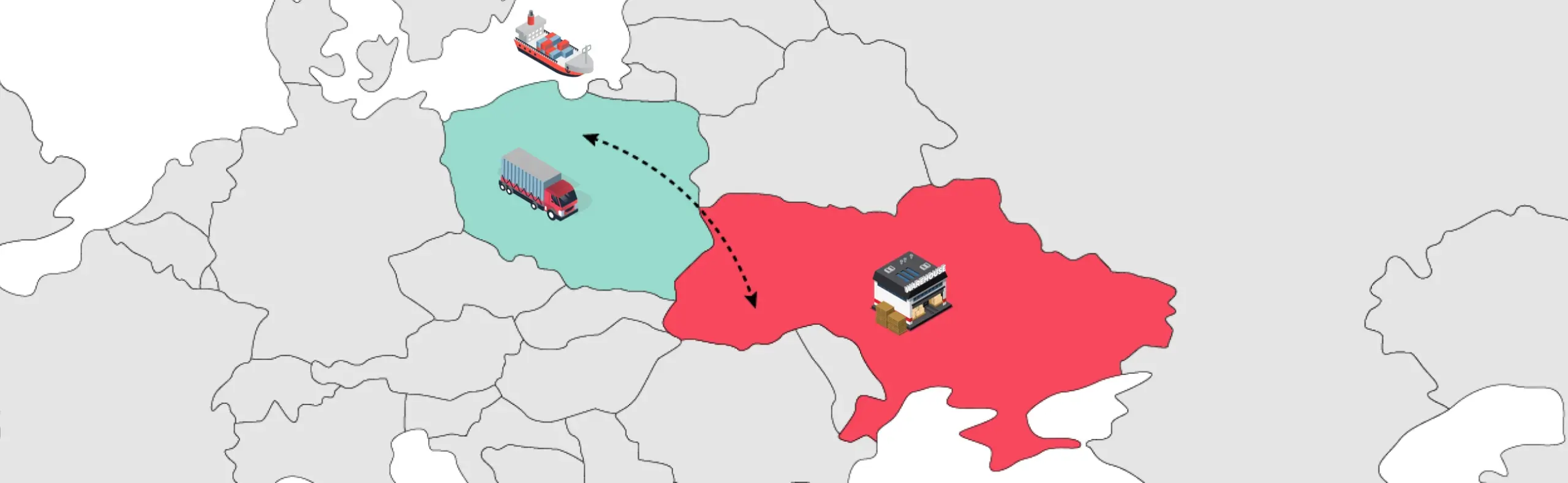
SYNEX Logistics covers the complete cycle of cross-border shipments, from document preparation and customs brokerage to carrier management and last-mile delivery. Our integrated process offers end-to-end visibility, proactive compliance management, and fitted solutions for even the most intricate international supply chains. We have experience in designing logistics even through difficult regions, such as the Caspian and Ukraine. Contact us to choose a partner who can move your goods cross-border with utmost care and safety.